
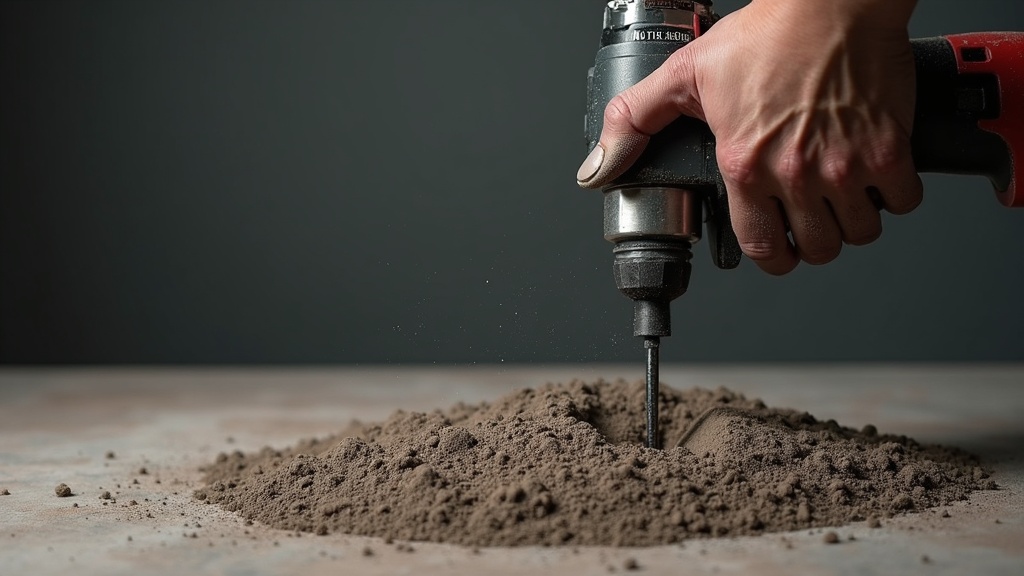
Grout Mixer for Drill AI Applications
Discover how a grout mixer for drill integrates with AI training datasets for construction automation, optimizing mixing speeds and paddle selection tools.
Table of Contents
- Quick Summary
- By the Numbers
- Introduction
- Computer Vision and Equipment Recognition
- Monitoring RPM and Mixing Speeds
- Detecting Air Entrainment and Consistency
- Slaking Time and Process Automation
- Important Questions About grout mixer for drill
- Comparison
- Practical Tips
- The Bottom Line
Quick Summary
Grout mixer for drill systems are specialized attachments used to blend cementitious materials with a power drill. In AI training contexts, computer vision models analyze these tools to automate construction workflows, monitor RPM compliance, and detect air entrapment risks during mixing operations.
By the Numbers
- 300 RPM: Recommended maximum speed for mixing cementitious grout to minimize air entrapment (MAPEI Corporation, 2024)[1].
- 5 Minutes: Upper end of the recommended mixing time before allowing the material to slake (National Tile Contractors Association, 2024)[2].
- 0.5 Inches: Chuck size capacity on heavy-duty low-speed drills designed for mixing paddles (Harbor Freight Tools, 2024)[3].
Introduction
Training artificial intelligence to oversee construction tasks requires highly specific datasets, and the grout mixer for drill is a prime example of a tool that benefits from machine learning oversight. While heavy industrial sites rely on massive automated plants, smaller tunneling repairs and tile installations depend on handheld power tools. By feeding thousands of images and sensor readings into neural networks, developers can teach AI systems to recognize proper equipment usage, monitor rotational speeds, and prevent material failures.
This article explores how computer vision and predictive algorithms optimize the use of a drill-mounted grout mixer. We will examine equipment recognition, speed monitoring, consistency detection, and process automation. Whether you are building datasets for robotics or evaluating the AI training ROI for business applications in construction, understanding these technical parameters is essential for creating accurate, real-world models.
Computer Vision and Equipment Recognition
Training artificial intelligence to identify a grout mixer for drill requires extensive image datasets capturing various paddle designs and drill configurations. Computer vision models must differentiate between a standard drill mixing paddle for grout and inappropriate attachments that could damage the material. Bounding box annotations help algorithms recognize the chuck capacity and the overall length of the mixing attachment.
For instance, datasets must teach the AI that a universal thinset and grout mixing paddle typically measures 16 inches in length, while professional variants can reach 23.5 inches to provide greater reach in deep mixing buckets (QEP, 2024)[4]. The models also learn to verify that the power drill grout agitator is inserted into a chuck with a minimum size of 0.375 inches (QEP, 2024)[4]. When AI vision systems detect a mismatch, they can alert human operators to prevent slippage during the blending of cementitious materials.
Beyond basic recognition, advanced neural networks evaluate the condition of the handheld drill grout attachment. Bent or worn paddles introduce uneven shear forces, leading to inconsistent batches. By training convolutional neural networks on thousands of images of degraded versus pristine paddles, AI can recommend replacement before a drill-operated mortar mixer compromises the batch.
Monitoring RPM and Mixing Speeds
Maintaining optimal rotational speed is critical when operating a grout mixer for drill, making it a prime target for AI-driven sensor fusion and visual monitoring. High speeds introduce excess air, which can weaken the grout and lead to increased porosity and shading issues (MAPEI Corporation, 2024)[1]. As Dan Marvin, Vice President of Technical Services at MAPEI Corporation, explains, “When mixing grout with a drill, use a low-speed mixer and a paddle designed for cementitious materials. High speeds introduce excess air, which can weaken the grout and lead to increased porosity and shading issues” (MAPEI Corporation, 2024)[1].
AI systems monitor these variables using a combination of acoustic sensors and visual tachometers. While some paddles are rated for a maximum drill speed of 1200 RPM, the recommended maximum speed for actual mixing is much lower (QEP, 2024)[4]. Jim Whitfield, Director of Technical Services at MAPEI, notes that “A variable-speed drill with a mixing attachment is acceptable for grout as long as you keep the speed under 300 RPM and avoid whipping the material. The goal is a creamy, uniform consistency without entrapped air” (TCNA, 2024)[5]. Machine learning algorithms process audio frequencies from the drill motor to estimate RPM in real-time, ensuring operators adhere to strict RPM recommendations without needing direct digital readouts on the tool. For broader context on standardizing these automated construction technologies, developers often refer to the NIST artificial intelligence frameworks.
Detecting Air Entrainment and Consistency
Visual and acoustic AI models are increasingly deployed to detect air entrapment and evaluate the creamy consistency of grout mixed with a drill. Over-mixing is a common error that algorithms are trained to flag. Bart Bettiga, Executive Director of the National Tile Contractors Association, warns that “Using a drill with the appropriate grout mixing paddle allows installers to achieve a more consistent mix, but it is critical to follow the manufacturer’s RPM recommendations. Over-mixing can change water demand and ultimately affect performance” (National Tile Contractors Association, 2024)[2].
To achieve the ideal texture, AI vision systems analyze the surface reflection and flow dynamics of the thinset as it folds over the paddle. Industry consultants emphasize that the key to drill-mixed grout is control, noting that installers who whip the material at high speed invite color problems and premature failure (TileLetter, 2024)[6]. While handheld tools require this intense AI scrutiny for small batches, larger mining and tunneling operations utilize industrial colloidal grout mixing equipment to handle these variables at a massive scale, ensuring structural integrity in deep underground environments.
Slaking Time and Process Automation
The slaking period following the use of a grout mixer for drill is a crucial phase that AI scheduling algorithms now track to prevent premature application. Slaking allows the cementitious materials to fully absorb water, which is essential for achieving the correct chemical cure. According to technical data sheets, manufacturers recommend allowing a 5-minute slake time after mixing with a low-speed drill before remixing and applying the material (MAPEI Corporation, 2024)[1].
On modern smart job sites, IoT sensors and edge computing devices manage this timeline. When an operator finishes mixing a 5-gallon batch size, the system logs the timestamp and initiates a countdown (QEP, 2024)[4]. Reliable site connectivity, such as T-Mobile 5G networks, ensures that these edge devices can sync slaking timers with central project management dashboards in real-time. If a worker attempts to use the material before the timer expires, computer vision cameras can detect the motion and trigger an audible warning. This integration of temporal tracking and visual monitoring ensures that every batch reaches its optimal chemical state, reducing the risk of structural weaknesses and callback repairs.
Important Questions About grout mixer for drill
How does AI improve the use of a grout mixer for drill?
AI improves the process by using computer vision to verify that the correct paddle is attached and acoustic sensors to monitor drill speed. Machine learning models analyze the mixing action in real-time, alerting operators if the RPM exceeds safe limits or if the mixing time is insufficient. This prevents air entrapment and ensures a uniform consistency.
What drill chuck size is needed for a grout mixing paddle?
Most universal mixing paddles require a minimum chuck size of 0.375 inches to ensure a secure grip. Heavy-duty low-speed drills designed specifically for mortar and grout often feature a 0.5-inch chuck capacity, which provides the necessary torque and stability for blending thick cementitious materials without slippage.
Can computer vision detect over-mixed grout?
Yes, advanced computer vision models can detect over-mixed grout by analyzing surface reflection, texture, and flow dynamics. Over-mixing introduces excess air and alters the water demand, changing the visual profile of the material. AI systems trained on thousands of images can identify these subtle textural shifts and prompt the operator to stop the drill.
Why is slaking time monitored by AI systems?
Slaking time is critical because it allows the cementitious particles to fully absorb water, which ensures proper curing and structural integrity. AI scheduling algorithms and IoT sensors track this 5-minute resting period to prevent workers from applying the grout too early. Visual monitoring can also detect premature use and trigger alerts on the job site.
Comparison
When integrating artificial intelligence into construction workflows, developers must choose the right sensing modality to monitor a grout mixer for drill. Each approach offers distinct advantages depending on the job site environment, budget, and required data granularity. The following table compares three primary AI monitoring methods used to ensure optimal mixing conditions.
| Monitoring Method | Primary Function | Best Use Case |
|---|---|---|
| Visual RPM Tracking | Uses cameras and visual tachometers to estimate drill speed and paddle rotation. | Open, well-lit environments where camera placement is unobstructed. |
| Acoustic Analysis | Processes motor frequencies and mixing sounds to detect speed and material thickness. | Dusty or low-light tunneling sites where visual sensors may fail. |
| IoT Sensor Integration | Reads direct telemetry from smart drills and tracks slaking timers via cloud dashboards. | Large-scale projects requiring centralized data logging and compliance reporting. |
Practical Tips
Building robust AI training datasets for construction equipment requires careful planning and adherence to industry best practices. To ensure your machine learning models accurately recognize and evaluate mixing processes, follow these actionable guidelines during data collection and deployment.
- Capture diverse lighting conditions: Collect images of the mixing paddle and drill in both bright outdoor sunlight and dimly lit indoor or underground environments to improve model generalization.
- Label material states precisely: Annotate training images with specific consistency tags, such as “dry,” “slaking,” and “creamy consistency,” to help the AI distinguish between acceptable and unacceptable material states.
- Include negative examples: Feed the neural network images of incorrect setups, such as a drill-operated mortar mixer running at excessively high speeds or using a bent paddle, to teach the system what to flag as an error.
Furthermore, always consult the latest installation guides and technical data sheets from manufacturers to ensure your AI’s baseline parameters match current industry standards. Regularly updating your datasets with new equipment models will keep your computer vision algorithms accurate and effective over time.
The Bottom Line
Integrating artificial intelligence with traditional construction tools transforms how we approach material preparation. By training computer vision and acoustic models to oversee a grout mixer for drill, companies can drastically reduce human error, prevent air entrapment, and ensure perfect slaking times. As smart job sites become the norm, the ability to accurately monitor RPM and consistency will separate industry leaders from the rest. To learn more about building effective datasets for construction automation, explore our comprehensive guide on computer vision datasets for construction.
Further Reading
- Best Practices for Mixing Tile Mortars and Grouts. MAPEI Corporation.
https://www.mapei.com/ca/en-ca/products-and-solutions/technical-documents/best-practices-mixing-tile-mortars-grouts - Grout Installation Errors and How to Avoid Them. National Tile Contractors Association.
https://www.tileletter.com/articles/1843-grout-installation-errors-and-how-to-avoid-them - Drill Mixers. Harbor Freight Tools.
https://www.harborfreight.com/power-tools/drills-drivers/drill-mixers.html - QEP 16 in. Steel Universal Thinset and Grout Mixing Paddle. QEP.
https://www.homedepot.com/p/QEP-16-in-Steel-Universal-Thinset-and-Grout-Mixing-Paddle-for-Cordless-and-Corded-Drills-61210/311174552 - TCNA Technical Handbook Webinar Q&A: Mixing Mortars and Grouts. TCNA.
https://www.tcnatile.com/education/mixing-mortars-grouts-webinar.html - Grout Color Problems: Causes and Cures. TileLetter.
https://www.tileletter.com/articles/1827-grout-color-problems-causes-and-cures