

Google: The Tech Giant Shaping the Future of AI
Google: The Tech Giant Shaping the Future of AI
Google has evolved far beyond its origins as a search engine, becoming a dominant force in artificial intelligence, cloud computing, and digital services. This article explores the company’s vast ecosystem, its AI advancements, and its impact on the global technology landscape.
Table of Contents
- The Google Ecosystem
- AI and Gemini
- Google Cloud
- Future Impact
- Frequently Asked Questions
- Comparison
- Practical Tips
- Final Thoughts on Google
- Useful Resources
Google in Context
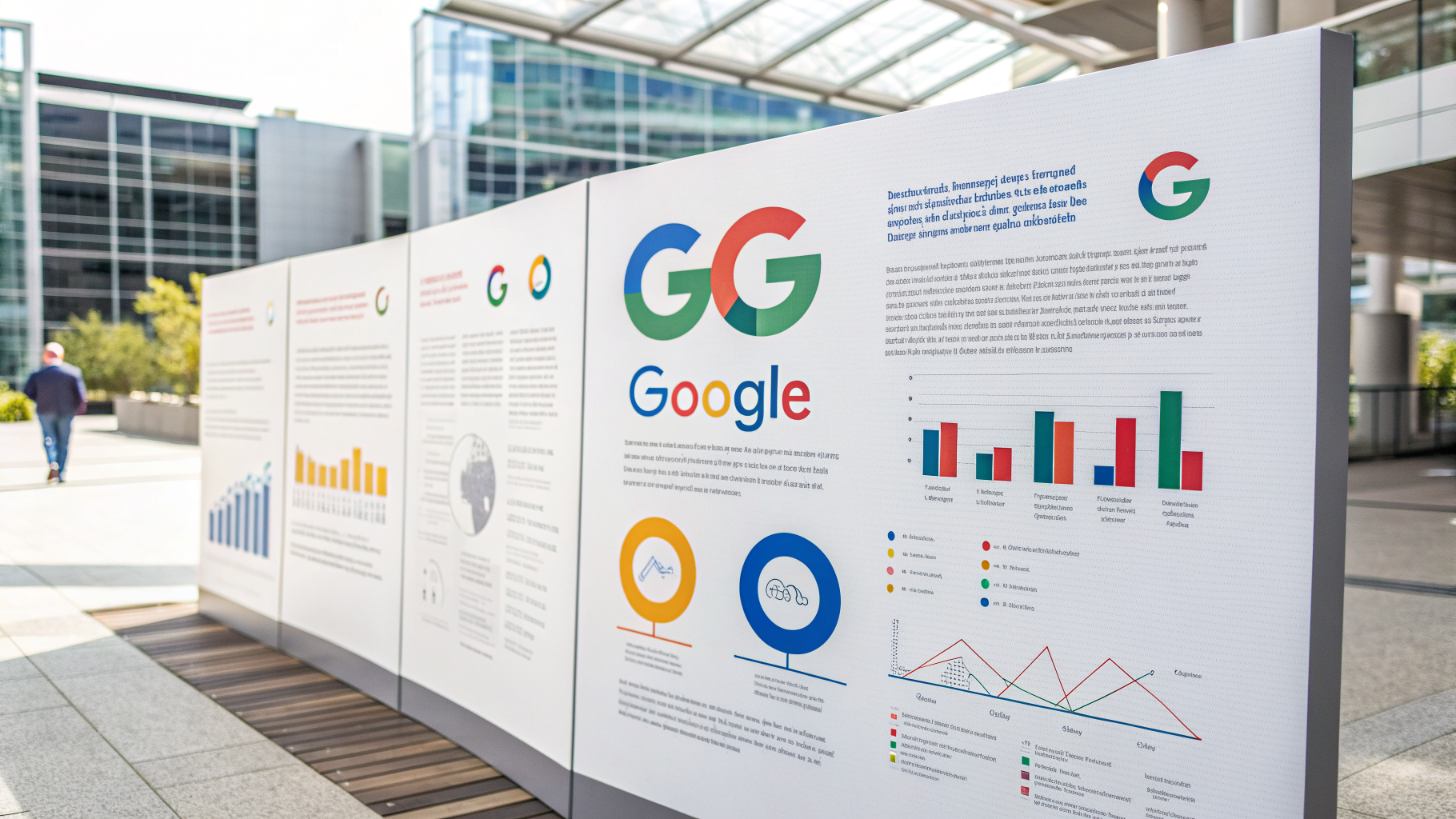
- Alphabet reported total revenue of $307.4 billion in 2025 (Alphabet Inc. 2025 Form 10-K, 2026)[1]
- Google Services generated 88% of Alphabet’s total revenue in 2025 (Alphabet Inc. 2025 Form 10-K, 2026)[1]
- Google Cloud revenue reached $53.2 billion in 2025 (Alphabet Inc. 2025 Form 10-K, 2026)[1]
- Google held an estimated 90.6% share of the global online search market in January 2026 (StatCounter GlobalStats, 2026)[2]
The Google Ecosystem
Google’s ecosystem is vast, encompassing a wide range of products and services that touch billions of users worldwide. The company’s core business remains its search engine, which processes trillions of queries each year. However, its portfolio has expanded dramatically to include YouTube, Android, Google Maps, Google Workspace, and the Chrome browser. These products are not standalone; they are deeply integrated, creating a seamless user experience across devices and platforms. For instance, Google’s share of the global online search market was estimated at 90.6% in January 2026 (StatCounter GlobalStats, 2026)[2], demonstrating its unparalleled reach. Beyond search, YouTube had more than 2.7 billion monthly logged-in users worldwide as of late 2025 (Alphabet Inc. Q4 2025 Earnings Call, 2025)[3], and over 3 billion Android devices are active monthly (Google for Developers, 2025)[4]. This interconnected ecosystem allows Google to collect vast amounts of data, which it uses to improve its services and target advertising, the primary source of its revenue. The company’s influence is also felt in the enterprise space, where Google Workspace is used by more than 9 million paying organizations globally (Google Workspace Blog, 2025)[5]. The sheer scale of this ecosystem makes Google a central player in the digital economy, and its strategic decisions have ripple effects across the entire technology industry.
AI and Gemini
Artificial intelligence is at the heart of Google’s strategy, with the Gemini model family representing its most ambitious effort yet. As Sundar Pichai, CEO of Google and Alphabet, stated, “We are reimagining every Google product with Gemini as your AI assistant – it will be able to take actions for you across Search, Workspace, Android and more, so you can get things done more naturally and efficiently” (A new Gemini era at Google I/O 2026, 2026)[6]. This vision is already being realized, with generative AI being integrated into Google Search to provide more conversational and helpful answers. Prabhakar Raghavan, Senior Vice President, Knowledge & Information, noted, “Search is evolving from a place where you find links into a place where you can get things done – we’re integrating generative AI so people can ask more complex questions and get more helpful, conversational answers right in Google Search” (What’s new in generative AI for Google Search, 2026)[7]. The Gemini models are designed to be natively multimodal, reasoning across text, images, video, and code in a unified way. Demis Hassabis, CEO of Google DeepMind, explained, “Our latest Gemini models are increasingly natively multimodal – they don’t just bolt on vision or audio, they reason across text, images, video and code in a unified way, which is critical for building more capable and trustworthy AI systems” (A New Era of Innovation: Google Research at I/O 2026, 2026)[8]. This focus on multimodality and integration positions Google to lead the next wave of AI-powered applications, from personal assistants to enterprise tools.
Gemini Models
The Gemini family includes a range of models optimized for different use cases, from on-device applications to large-scale data center deployments. These models are designed to be efficient and scalable, allowing developers to build innovative applications. Google is also investing heavily in making its AI more reliable and robust. Jeff Dean, Chief Scientist at Google DeepMind, emphasized, “One of our core research priorities at Google is making AI more reliable and robust in the real world, which means investing heavily in evaluation, safety techniques and grounding models in high-quality, up-to-date information” (Advancing AI responsibly at Google Research, 2026)[9]. This commitment to responsible AI development is crucial as these technologies become more integrated into daily life. The company’s research in this area is a key differentiator, ensuring that its AI systems are not only powerful but also safe and trustworthy. For those looking to understand the practical applications of these technologies, resources like the AI training and development courses available online can provide valuable context.
Google Cloud
Google Cloud has emerged as a major player in the cloud computing market, offering a suite of services that includes computing, data storage, data analytics, and machine learning. In 2025, Google Cloud revenue reached $53.2 billion, an increase of 26% year over year (Alphabet Inc. 2025 Form 10-K, 2026)[1]. This growth is driven by enterprises seeking to leverage AI and machine learning capabilities. Thomas Kurian, CEO of Google Cloud, stated, “Enterprises are choosing Google Cloud because we combine industry-leading AI with an open, secure and scalable infrastructure that lets them innovate quickly without compromising on data protection or compliance” (Google Cloud Next 2026: Advancing AI for every business, 2026)[10]. Google Cloud’s infrastructure is also notable for its efficiency, with the company reporting that its data centers deliver around 3 times more computing power for the same amount of electrical power compared with 2014 (Google Environmental Report, 2025)[11]. This focus on sustainability is a key selling point for environmentally conscious organizations. The platform’s AI capabilities, including access to Gemini models, make it a compelling choice for businesses looking to integrate advanced AI into their operations. Google Cloud’s success is a testament to the growing demand for cloud-based AI solutions and the company’s ability to compete with other major providers.
Future Impact
Google’s trajectory suggests it will continue to shape the future of technology, particularly in the realms of AI, search, and cloud computing. The company’s investments in AI are not just about improving existing products but also about creating entirely new categories of services. As AI becomes more pervasive, Google’s ability to integrate it across its ecosystem will be a key competitive advantage. The company’s commitment to responsible AI development, as highlighted by its research priorities, will also be crucial in navigating the ethical and societal challenges that come with these powerful technologies. Furthermore, Google’s dominance in search and digital advertising provides it with the resources to fund ambitious research and development projects. The company’s influence extends to the broader tech industry, where its decisions often set trends and standards. For instance, its focus on multimodal AI is likely to push other companies to develop similar capabilities. As Google continues to evolve, its impact on how we access information, communicate, and work will only grow. The company’s journey from a search engine to an AI-first company is a testament to its ability to adapt and innovate in a rapidly changing technological landscape.
Questions from Our Readers
How does Google make most of its money?
Google generates the vast majority of its revenue from advertising. Its search engine, YouTube, and other platforms serve targeted ads to users based on their interests and online behavior. The company’s advertising platform, Google Ads, allows businesses to bid on keywords and display ads to relevant audiences. In 2025, Google Services, which includes Search, YouTube, Android and Chrome, generated 88% of Alphabet’s total revenue (Alphabet Inc. 2025 Form 10-K, 2026)[1]. While Google Cloud and other bets are growing, advertising remains the company’s primary revenue driver.
What is the Gemini AI model?
Gemini is Google’s most advanced AI model family, designed to be natively multimodal. This means it can reason across text, images, video, and code in a unified way, rather than treating them as separate inputs. Google is integrating Gemini across its products, including Search, Workspace, and Android, to act as an AI assistant. The goal is to make interactions more natural and efficient, allowing users to get things done more easily. The development of Gemini represents a significant step forward in Google’s AI strategy.
Is Google Cloud a major competitor to AWS and Azure?
Yes, Google Cloud is a major player in the cloud computing market, competing directly with Amazon Web Services (AWS) and Microsoft Azure. While it has a smaller market share than its two main rivals, Google Cloud has been growing rapidly, with revenue reaching $53.2 billion in 2025 (Alphabet Inc. 2025 Form 10-K, 2026)[1]. It differentiates itself through its strengths in data analytics, machine learning, and AI, as well as its open and scalable infrastructure. Many enterprises choose Google Cloud for its advanced AI capabilities and commitment to security and compliance.
How is Google using AI to improve its search engine?
Google is integrating generative AI into its search engine to provide more conversational and helpful answers. Instead of just returning a list of links, the AI can synthesize information from multiple sources to answer complex questions directly. This evolution, as described by Prabhakar Raghavan, allows people to ask more complex questions and get more helpful, conversational answers right in Google Search (What’s new in generative AI for Google Search, 2026)[7]. This represents a significant shift in how users interact with the world’s most popular search engine.
Comparison
When evaluating Google’s approach to AI and cloud services, it is helpful to compare its strategy with those of its main competitors. The table below outlines key differences in their core offerings.
| Feature | Microsoft | Amazon | |
|---|---|---|---|
| AI Model Family | Gemini (multimodal) | Copilot (GPT-based) | Bedrock (multiple models) |
| Cloud Platform | Google Cloud | Microsoft Azure | AWS |
| Productivity Suite | Google Workspace | Microsoft 365 | Amazon WorkDocs |
| Key Differentiator | AI-native, open infrastructure | Enterprise integration | Breadth of services |
Practical Tips
For individuals and businesses looking to leverage Google’s ecosystem, several practical strategies can be effective. First, explore the AI features integrated into Google Workspace, such as smart compose and AI-powered summaries, to boost productivity. Second, consider using Google Cloud’s AI Platform to build and deploy machine learning models, taking advantage of its pre-trained models like Gemini. Third, for developers, the Android platform offers a vast user base and robust tools for creating AI-powered applications. Fourth, businesses should evaluate Google’s suite of analytics and marketing tools to better understand their customers and optimize their online presence. Finally, staying updated with Google’s latest announcements through its official blogs and events, such as Google I/O, can provide early insights into new capabilities. For those seeking to deepen their understanding of these technologies, exploring specialized AI training resources can be highly beneficial. Additionally, for a broader perspective on the evolving landscape of AI, you can read this overview of AI trends in enterprise.
Final Thoughts on Google
Google’s transformation from a search engine to an AI-first company is a remarkable story of innovation and adaptation. Its vast ecosystem, from search and advertising to cloud computing and AI, touches the lives of billions of people every day. The company’s commitment to developing powerful and responsible AI, as exemplified by the Gemini models, positions it at the forefront of the next technological revolution. As Google continues to evolve, its impact on how we work, communicate, and access information will only deepen. To stay ahead of these changes, explore the wealth of information and training available on AI training and development to understand how these technologies can be applied in your own life and work.
Useful Resources
- Alphabet Inc. 2025 Form 10-K.
https://abc.xyz/investor/static/pdf/202502-alphabet-10k.pdf - StatCounter GlobalStats.
https://gs.statcounter.com/search-engine-market-share - Alphabet Inc. Q4 2025 Earnings Call.
https://abc.xyz/investor/earnings/2025/Q4_alphabet_earnings/ - Google for Developers.
https://developer.android.com/about - Google Workspace Blog.
https://workspace.google.com/blog/product-updates/google-workspace-collaboration-growth-2025 - A new Gemini era at Google I/O 2026.
https://blog.google/innovation-and-ai/google-io-2026-keynote-gemini/ - What’s new in generative AI for Google Search.
https://blog.google/products/search/generative-ai-updates-february-2026/ - A New Era of Innovation: Google Research at I/O 2026.
https://research.google/blog/a-new-era-of-innovation-google-research-at-io-2026/ - Advancing AI responsibly at Google Research.
https://research.google/blog/advancing-ai-responsibly-2026-update/ - Google Cloud Next 2026: Advancing AI for every business.
https://cloud.google.com/blog/products/ai-machine-learning/google-cloud-next-2026-key-announcements - Google Environmental Report 2025.
https://sustainability.google/reports/environmental-report-2025/
For more about Google ai certification 2, see Google Ai Certification 2.