
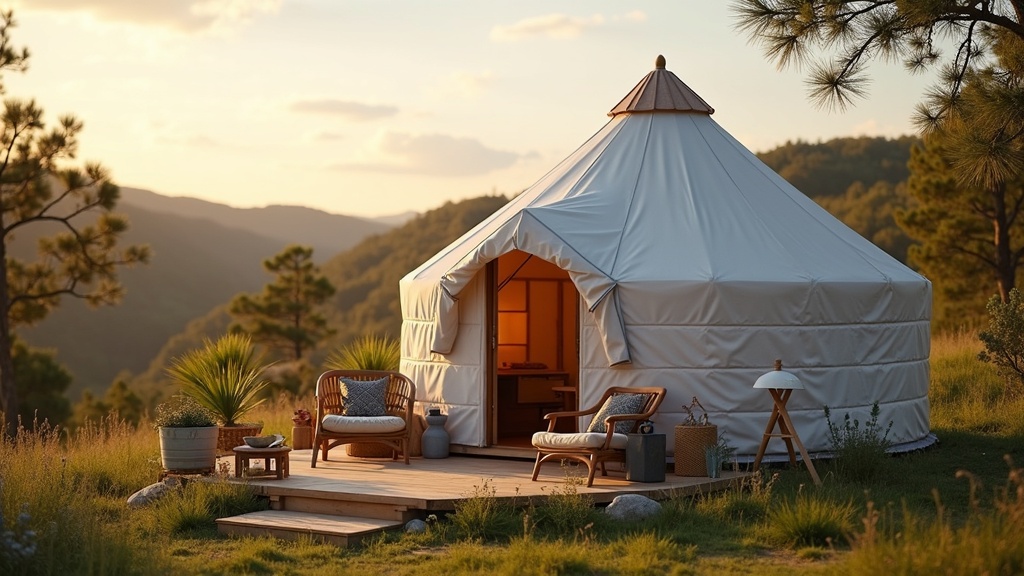
Glamping Yurt: The Ultimate Guide to Luxury Tent Camping
Discover why the glamping yurt has become the most sought-after structure in luxury camping, combining traditional design with modern amenities for an unforgettable outdoor experience.
Table of Contents
- Summary
- Quick Stats: Glamping Yurt
- Introduction
- Why the Glamping Yurt Leads the Luxury Camping Market
- Design and Amenities That Define the Modern Glamping Yurt
- Operational Advantages for Glamping Yurt Owners
- Sustainability and the Glamping Yurt
- Frequently Asked Questions
- Comparison: Glamping Yurt vs. Other Structures
- Practical Tips for Your Glamping Yurt Venture
- Final Thoughts on Glamping Yurt
- Further Reading
Article Snapshot: A glamping yurt is a semi-permanent, circular tent structure that blends traditional nomadic design with luxury amenities like en-suite bathrooms, heating, and Wi-Fi. This article explores why yurts dominate the glamping market, their design advantages, operational benefits, and sustainability credentials, offering actionable insights for operators and travelers alike.
Quick Stats: Glamping Yurt
- The global glamping market is projected to reach USD 8.21 billion by 2032, growing at a CAGR of 10.37% from 2026 (Glamping Global Market Analysis Report 2026–2032, 2026)[1].
- Luxury tents and yurts together will account for over 35% of global glamping accommodation revenue by 2034 (Future Market Insights, 2024)[2].
- Yurts and safari tents represent more than 40% of newly installed glamping units globally as of 2025 (MarketIntelo, 2025)[3].
- Across North American glamping operators, the average daily rate (ADR) reached USD 251 per night in 2025, up 21% since 2023 (Glamping Show Americas, 2025)[4].
Introduction
The glamping yurt has emerged as the standout accommodation choice in the rapidly expanding luxury camping sector. As travelers increasingly seek immersive outdoor experiences without sacrificing comfort, yurts offer a perfect balance – combining the rustic charm of traditional tent structures with modern amenities like heating, en-suite bathrooms, and high-speed internet. This article delves into why the glamping yurt is leading the market, from its design versatility to its operational and sustainability benefits. Whether you’re an aspiring glamping operator or a traveler curious about this unique lodging option, you’ll find practical insights backed by industry data and expert perspectives.
Why the Glamping Yurt Leads the Luxury Camping Market
The glamping yurt has become the dominant accommodation type in the luxury camping sector, driven by strong consumer demand and favorable market dynamics. Industry data show that global glamping bookings increased 24.6% year-over-year in 2025, driven largely by millennial and Gen Z travelers (MarketIntelo, 2025)[3]. This surge is reflected in the structural preferences of new developments: yurts and safari tents together represent more than 40% of newly installed glamping units globally as of 2025 (MarketIntelo, 2025)[3].
Sarah Riley, Founder of The Glamping Academy and Eco Resort Network, notes, “Yurts have become one of the most versatile structures in glamping because they offer a strong return on investment: they’re quick to install, can be operated almost year-round with the right insulation, and deliver the ‘wow factor’ guests expect from luxury camping” (2026)[5]. This versatility is key to the yurt’s market leadership. Unlike traditional cabins or safari tents, yurts can be adapted to various climates and terrains, from mountain meadows to coastal dunes, making them a flexible option for operators.
The financial case for glamping yurts is compelling. Future Market Insights projects that luxury tents and yurts together will account for over 35% of global glamping accommodation revenue by 2034 (Future Market Insights, 2024)[2]. This is supported by high average daily rates: across North American operators, the ADR reached USD 251 per night in 2025, a 21% increase since 2023 (Glamping Show Americas, 2025)[4]. Danielle Dyer, Co-founder of Glamping Show Americas, confirms, “We continue to see extremely strong performance from glamping yurts: they’re among the top-booked unit types, and operators report that guests perceive them as a premium experience even when ADRs are significantly higher than traditional cabins” (2025)[4].
Design and Amenities That Define the Modern Glamping Yurt
The modern glamping yurt is a far cry from its traditional nomadic predecessor. Today’s yurts are engineered to provide a luxury experience while maintaining the aesthetic connection to nature that guests crave. Bill Gurney, President of Pacific Yurts Inc., explains, “For glamping operators, yurts hit a sweet spot between comfort and authenticity – guests feel close to nature but still enjoy amenities like en-suite bathrooms, heating, and high-speed Wi-Fi, which are now standard expectations in the sector” (2026)[6].
Key design features of a premium glamping yurt include:
- Insulated walls and floors: Modern yurts use high-performance insulation to maintain comfortable temperatures year-round, extending the operating season in colder climates.
- En-suite bathrooms: Many glamping yurts now include private bathrooms with composting toilets or flush systems, hot showers, and luxury fixtures.
- Integrated technology: Hidden wiring for lighting, heating, and Wi-Fi is standard, ensuring guests stay connected without visual clutter.
- Customizable interiors: From king-size beds and wood-burning stoves to fully equipped kitchens, the interior can be tailored to specific guest demographics.
Randy Wood, CEO of Glamping Hub, adds, “The strongest growth in bookings we’re seeing is in well-equipped glamping yurts – units that combine design-led interiors with sustainable heating and cooling solutions are consistently outperforming other tented accommodation in both occupancy and guest satisfaction scores” (2026)[7]. This emphasis on design and sustainability is driving innovation in yurt construction, with manufacturers offering modular components that allow for easy upgrades and maintenance.
Operational Advantages for Glamping Yurt Owners
Owning and operating a glamping yurt offers distinct advantages over other accommodation types, making it an attractive investment for entrepreneurs. The yurt’s circular design and tension-based structure allow for rapid installation – often within a few days – compared to the weeks or months required for traditional cabins. This speed-to-market is critical in the competitive glamping industry, where first-mover advantage can significantly impact revenue.
Maintenance costs are also lower than for permanent structures. Yurts are semi-permanent, meaning they can be relocated if needed, and their materials (typically canvas, wood, and steel) are durable and easy to repair. Sarah Riley emphasizes, “They’re quick to install, can be operated almost year-round with the right insulation, and deliver the ‘wow factor’ guests expect from luxury camping” (2026)[5]. This operational efficiency translates to higher profit margins, especially when combined with the premium pricing that glamping yurts command.
Furthermore, yurts are highly scalable. Operators can start with a single unit and expand incrementally, adding more yurts as demand grows. This modular approach reduces financial risk and allows for market testing before significant capital investment. For those seeking guidance on optimizing their glamping business operations, resources like ai training tips can provide valuable insights into using data and technology to improve booking rates and guest experiences.
Sustainability and the Glamping Yurt
The glamping yurt is inherently more sustainable than many traditional accommodation options, aligning with the growing consumer demand for eco-friendly travel. Dr. Megan Epler Wood, Director of the International Sustainable Tourism Initiative at Harvard T.H. Chan School of Public Health, states, “Yurt-based glamping can be a low-impact accommodation model when sited and managed correctly; the structures are typically semi-permanent, require fewer materials than conventional lodges, and can support meaningful community-based tourism if local supply chains are integrated” (2026)[8].
Several factors contribute to the yurt’s environmental credentials:
- Material efficiency: Yurts use significantly less wood and concrete than cabins or lodges, reducing their carbon footprint during construction.
- Minimal site disruption: Because yurts are semi-permanent, they require less excavation and foundation work, preserving the natural landscape.
- Energy efficiency: The circular shape minimizes heat loss, and modern insulation materials reduce energy consumption for heating and cooling.
- Local sourcing opportunities: Operators can partner with local artisans for furniture and decor, supporting regional economies and reducing transportation emissions.
As the glamping market grows – from USD 4.11 billion in 2025 to an estimated USD 4.50 billion in 2026 (Glamping Global Market Analysis Report, 2026)[1] – sustainability will become an even stronger differentiator. Operators who prioritize eco-friendly practices, such as using renewable energy sources and implementing water conservation systems, can attract environmentally conscious travelers and command premium rates. For those looking to deepen their understanding of sustainable hospitality, ai training courses can offer specialized knowledge in green operations and guest engagement strategies.
Important Questions About Glamping Yurt
What is the average cost to build a glamping yurt?
The cost of building a glamping yurt varies widely based on size, materials, and amenities. A basic, DIY-ready yurt shell can start at around USD 10,000 to USD 20,000, while a fully outfitted luxury yurt with insulation, en-suite bathroom, heating, and custom interiors can range from USD 40,000 to USD 80,000 or more. Installation costs, site preparation, and permits add another USD 5,000 to USD 15,000. Despite the upfront investment, the high average daily rates – USD 251 per night in North America (Glamping Show Americas, 2025)[4] – mean many operators recoup their investment within 2-3 years.
How long does a glamping yurt last?
A well-maintained glamping yurt can last 15-25 years, depending on the quality of materials and climate conditions. The canvas or fabric cover typically needs replacement every 8-12 years, while the wooden lattice and steel components can last much longer. Regular maintenance – such as treating the canvas for UV protection, checking for mold or mildew, and ensuring the tension cables are tight – extends the lifespan significantly. In harsh climates, adding a weatherproof outer layer or using high-grade marine canvas can add years to the structure’s life.
Can a glamping yurt be used year-round?
Yes, a properly insulated glamping yurt can be used year-round, even in cold climates. Key features for four-season use include: insulated walls and a floor (R-value of 20+ recommended), a reliable heating source (wood-burning stove, propane heater, or mini-split heat pump), and weatherproofing around the dome and base. In winter, yurts with good insulation maintain heat efficiently due to their circular shape, which minimizes surface area. Some operators in northern regions report occupancy rates above 80% during winter months by offering amenities like hot tubs and snowshoeing packages.
What are the planning and zoning requirements for a glamping yurt?
Planning and zoning requirements for glamping yurts vary significantly by location. In many areas, yurts are classified as temporary or semi-permanent structures, which can simplify permitting compared to permanent buildings. However, operators should check local regulations regarding: minimum lot sizes, setbacks from property lines, septic and water system approvals, fire safety codes, and maximum occupancy limits. Some jurisdictions require a conditional use permit or special event license. It’s advisable to consult with a local land-use attorney or planning department before purchasing land or starting construction. Many successful glamping yurt operators also join industry associations for guidance on regulatory compliance.
Comparison: Glamping Yurt vs. Other Structures
Choosing the right structure for a glamping site involves weighing factors like cost, guest appeal, durability, and operational ease. The following table compares the glamping yurt with two other popular options: safari tents and traditional cabins.
| Feature | Glamping Yurt | Safari Tent | Traditional Cabin |
|---|---|---|---|
| Installation Time | 2-5 days | 1-3 days | 4-8 weeks |
| Average Cost (Fully Equipped) | USD 40,000–80,000 | USD 30,000–60,000 | USD 100,000–250,000 |
| Year-Round Usability | Excellent (with insulation) | Good (with insulation) | Excellent |
| Guest Appeal (Wow Factor) | High | High | Moderate |
| Lifespan | 15-25 years | 10-15 years | 30-50 years |
| Relocatability | Yes | Yes | No |
As the table shows, the glamping yurt offers a compelling balance of lower upfront cost, quick installation, high guest appeal, and year-round usability, making it the preferred choice for many operators entering the luxury camping market.
Practical Tips for Your Glamping Yurt Venture
Launching a successful glamping yurt operation requires careful planning and execution. Here are actionable tips based on industry best practices and expert insights:
- Invest in quality insulation and heating: To maximize your operating season and guest comfort, choose a yurt with high R-value insulation and a reliable heating system. This not only extends your booking window but also justifies premium pricing.
- Focus on the guest experience: Beyond the structure, consider what makes your glamping yurt memorable. Add thoughtful touches like locally sourced bedding, a fire pit, stargazing skylights, or a private hot tub. Small details drive repeat bookings and positive reviews.
- Leverage technology for operations: Use property management software to streamline bookings, automate guest communications, and manage maintenance schedules. Integrating smart home features like keyless entry and smart thermostats can also enhance the guest experience while reducing your workload.
- Prioritize sustainability: Implement eco-friendly practices such as solar panels, composting toilets, rainwater collection, and local sourcing for supplies. Market these features prominently, as sustainability is a key decision factor for many glamping guests.
- Stay informed on market trends: The glamping industry is evolving rapidly. Follow industry reports and attend trade shows to stay ahead of consumer preferences and regulatory changes. Resources like the Glamping Show Americas provide valuable networking and education opportunities.
- Consider specialized training: To optimize your business operations and marketing, explore ai training courses that cover data-driven decision-making, customer analytics, and digital marketing strategies tailored to the hospitality sector.
For more about Glamping yurt, see discover glamping yurt insights.
Final Thoughts on Glamping Yurt
The glamping yurt represents a unique intersection of tradition, luxury, and sustainability, making it the premier choice for modern outdoor accommodation. With the global glamping market projected to reach USD 8.21 billion by 2032 (Glamping Global Market Analysis Report, 2026)[1], and yurts leading new installations, the opportunity for operators is substantial. Whether you’re a seasoned hospitality entrepreneur or a first-time investor, the glamping yurt offers a proven model for success that balances guest delight with operational efficiency. To take the next step in your glamping journey, explore our comprehensive ai training tips for actionable strategies to grow your business.
Further Reading
- Glamping Global Market Analysis Report 2026–2032. GlobeNewswire / ResearchAndMarkets.
https://www.globenewswire.com/news-release/2026/01/19/3220770/28124/en/glamping-global-market-analysis-report-2026-2032-accommodation-types-demographic-cohorts-structural-formats-booking-behaviors-usage-intents-regional-dynamics-technologies.html - Future Market Insights – Glamping Market Size & Trends 2024–2034.
https://www.futuremarketinsights.com/reports/glamping-market - MarketIntelo – Glamping Structures Market Research Report 2033.
https://marketintelo.com/report/glamping-structures-market - Glamping Show Americas – 2025 State of the Industry Report.
https://www.glampingshow.us/wp-content/uploads/2025/11/2025-state-of-the-industry.pdf - Sarah Riley, The Glamping Academy and Eco Resort Network – How to Choose the Right Glamping Structure for Your Site (2026).
https://www.glampingbusiness.com/how-to-choose-the-right-glamping-structure-for-your-site - Bill Gurney, Pacific Yurts Inc. – Why Yurts Are Driving the Next Wave of Glamping Growth (2026).
https://www.pitchup.com/press/article/why-yurts-are-driving-glamping-growth - Randy Wood, Glamping Hub – Glamping Hub 2026 Outdoor Hospitality Trends (2026).
https://www.glampinghub.com/blog/2026-outdoor-hospitality-trends - Dr. Megan Epler Wood, Harvard T.H. Chan School of Public Health – Nature-Based Tourism and Low-Impact Accommodation Models (2026).
https://ista.hms.harvard.edu/nature-based-tourism-low-impact-accommodation