
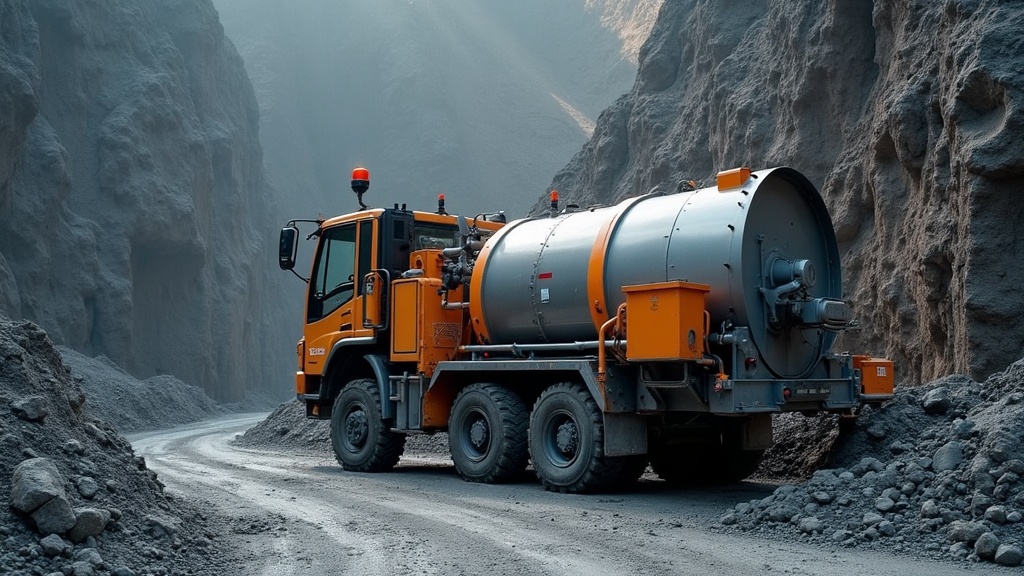
Colloidal Grout Mixing Equipment in Mining Guide: Key Insights
Discover how colloidal grout mixing equipment in mining guide principles can enhance underground operations. This article covers the mechanics, selection criteria, operational best practices, and quality control measures for colloidal mixers used in rock consolidation and ground support grouting.
Table of Contents
- Mechanics and Advantages of Colloidal Mixing
- Selecting Equipment for Mining Applications
- Operational Best Practices for Underground Grouting
- Quality Control and Performance Monitoring
- Frequently Asked Questions
- Comparison: Colloidal vs. Paddle Mixers
- Practical Tips for Grout Operations
- Key Takeaways
Quick Stats: Colloidal Grout Mixing Equipment in Mining Guide
- Colloidal mixers can reduce mixing time by 50% compared with conventional paddle mixers (Amix Systems Technical Bulletin, 2019)[1].
- Colloidal mixing can reduce grout bleed by up to 70% in cementitious grouts (U.S. Army Corps of Engineers Grouting Manual, 2018)[2].
- Typical output capacity of mining-grade colloidal mixing units is 8 cubic meters per hour (RockTech Pty Ltd, 2020)[3].
Introduction
Colloidal grout mixing equipment in mining guide applications represents a specialized category of high-shear mixing technology designed to produce stable, homogeneous cementitious slurries. Unlike conventional paddle mixers that rely on low-speed agitation, colloidal mixers use a high-speed rotor-stator mechanism to generate intense shear forces. This process breaks down cement agglomerates, fully hydrates individual particles, and creates a thixotropic suspension with minimal bleed and superior penetration characteristics. In underground mining and tunneling, where ground conditions are unpredictable and the consequences of grout failure are severe, the reliability of the mixing process directly influences safety and project outcomes. This guide explores the mechanics, selection criteria, and operational best practices for colloidal mixing equipment in mining environments.
Mechanics and Advantages of Colloidal Mixing
The core principle behind colloidal grout mixing equipment is the application of high mechanical energy to a cement-water mixture. The rotor-stator assembly, operating at speeds exceeding 1,500 RPM, creates a powerful shear zone that disperses cement particles down to a colloidal size range. This mechanical process is fundamentally different from simple agitation. As Tim Ruff, President of Amix Systems Ltd., explains, “Colloidal mixers are designed to produce highly consistent cement slurries, with rapid mixing times and superior blending compared to conventional paddle mixers, which is critical for high-performance grouting applications in mining and tunneling.”[4]
Key Performance Benefits
The high-shear action delivers several quantifiable advantages. According to technical data, colloidal mixers can reduce mixing time by 50% while simultaneously improving slurry stability (Amix Systems Technical Bulletin, 2019)[1]. The intense dispersion reduces grout bleed by up to 70% compared to conventionally mixed grouts (U.S. Army Corps of Engineers Grouting Manual, 2018)[2]. This reduction in bleed is critical in vertical or overhead applications common in mining, where water separation can compromise the integrity of the grout column. Eric Poupard, a Grouting Specialist at Norman-Spencer Engineering, notes, “The key advantage of colloidal grout mixing is the ability to create a truly stable suspension with ultra-fine cement particles, which results in reduced bleed, higher early strength and more reliable penetration into fractured rock masses in underground mines.”[5]
Impact on Grout Quality
The improved dispersion directly affects the rheological properties of the grout. A stable colloidal suspension exhibits lower viscosity at high shear rates (improving pumpability) while maintaining higher viscosity at rest (reducing segregation). This behavior is essential for penetrating fine fractures in rock masses. Dr. Andrew J. Scarth, a Geotechnical Engineer at Golder Associates, states, “For low-viscosity cementitious grouts used in deep mine stabilization, colloidal mixers provide the energy input required to break down agglomerates and fully hydrate the cement, which directly influences pumpability and long-term performance of the grout.”[6]
Selecting Equipment for Mining Applications
Choosing the right colloidal grout mixing equipment in mining guide operations requires careful evaluation of several technical parameters. The selection process must account for the specific demands of underground environments, including space constraints, power availability, and the required grout output volume.
Capacity and Throughput Requirements
Mining-grade colloidal mixing units typically offer output capacities ranging from 2 to 8 cubic meters per hour. For large-scale underground projects, units capable of 8 cubic meters per hour are common (RockTech Pty Ltd, 2020)[3]. The required capacity depends on the grouting strategy – whether the operation involves continuous injection or batch grouting of specific zones. Matching the mixer output to the pump capacity is essential to avoid downtime and ensure consistent grout delivery.
Key Technical Specifications
Several specifications are critical when evaluating equipment. The maximum allowable grout temperature for high-performance colloidal cementitious grouts is 32 degrees Celsius (U.S. Army Corps of Engineers Grouting Manual, 2018)[2]. Mixers should include temperature monitoring to prevent overheating during extended operation. The recommended maximum particle size of cement for use in colloidal mixing equipment is 75 micrometers to avoid clogging the high-shear head (European Federation of Geologists, 2016)[7]. Additionally, the common operating pressure range for pumping colloidal grout in underground mining is 40 bar (Normet Underground Grouting Handbook, 2017)[8], which the mixer and associated pump must be rated to handle.
Integration with Automation
Modern operations increasingly rely on automated batching and dosing systems. Mike McRae, Product Manager for Mining Solutions at Normet, observes, “Modern colloidal grout mixers paired with automated dosing systems allow mines to standardize grout quality across multiple headings, improving roof support effectiveness and reducing variability caused by manual batching.”[9] When selecting equipment, consider compatibility with water-cement ratio controllers, additive dispensers, and data logging systems that support quality assurance programs. For a comprehensive overview of available systems, refer to the colloidal grout plant selection guide.
Operational Best Practices for Underground Grouting
Effective operation of colloidal grout mixing equipment in mining guide contexts requires adherence to established procedures that maximize equipment performance and grout quality. Proper operation begins with understanding the mixing cycle and extends to routine maintenance.
Mixing Cycle Parameters
The recommended minimum colloidal mixer circulation time to achieve full dispersion of cement particles is 3 minutes (Amix Systems Technical Bulletin, 2019)[1]. This ensures that the high-shear head has sufficient time to break down all agglomerates. The target water-to-cement ratio for stable colloidal grout used in underground rock consolidation is 0.8 (Normet Underground Grouting Handbook, 2017)[8]. Operators should verify the w/c ratio using a density meter or mud balance before pumping begins.
Material Handling and Quality
Cement storage and handling directly affect mixer performance. Cement should be stored in dry conditions and sieved before entering the mixer to remove any lumps or foreign material that could exceed the 75-micrometer particle size limit. Water quality is equally important – water with high chloride or sulfate content can affect grout setting time and final strength. Using potable water or site-specific mix water that has been tested is recommended.
Maintenance and Troubleshooting
Regular maintenance of the rotor-stator assembly is critical. The high-speed operation creates wear on the mixing head, and worn components reduce shear efficiency. Operators should inspect the clearance between the rotor and stator regularly and replace components when the gap exceeds manufacturer specifications. Common issues include cavitation (caused by air entrainment), overheating (exceeding 32°C), and clogging (from oversized particles). Addressing these issues promptly prevents downtime and ensures consistent grout quality.
Quality Control and Performance Monitoring
Quality control is an integral part of any colloidal grout mixing equipment in mining guide program. Consistent testing and monitoring ensure that the grout meets the design specifications required for effective ground support.
Field Testing Protocols
Standard field tests for colloidal grout include Marsh cone viscosity, bleed testing, and unconfined compressive strength (UCS) testing on molded cubes. The Marsh cone test provides a quick measure of viscosity and can indicate whether the w/c ratio is correct. Bleed tests, performed by allowing a grout sample to stand in a graduated cylinder, should show less than 2% bleed for a properly mixed colloidal grout. UCS testing at 7 and 28 days confirms that the grout achieves the required strength for the specific application.
Data Logging and Traceability
Modern colloidal mixing systems can integrate with data logging platforms that record batch parameters – including water volume, cement weight, mixing time, and final grout density – for each batch. This data is invaluable for quality assurance programs and can be used to identify trends or deviations in grout quality over time. Implementing a digital record-keeping system supports traceability and accountability, which is particularly important for projects subject to regulatory oversight.
Training and Competency
Operator competency is a critical factor in grout quality. Personnel should receive training on the specific mixing equipment, including start-up and shutdown procedures, emergency stops, and cleaning protocols. Regular refresher training ensures that operators remain familiar with best practices and any updates to equipment or procedures. Investing in training reduces the risk of operator error, which is a common cause of grout quality issues in the field. For those looking to deepen their understanding, exploring artificial intelligence training can offer insights into how automation and data analysis are transforming industrial processes, including grouting operations.
Important Questions About Colloidal Grout Mixing Equipment in Mining Guide
What is the difference between a colloidal mixer and a paddle mixer for grouting?
A colloidal mixer uses a high-speed rotor-stator assembly to generate intense shear forces that break down cement agglomerates and fully hydrate individual particles, producing a stable, thixotropic suspension. A paddle mixer relies on low-speed agitation and is less effective at dispersing cement particles, resulting in higher bleed, lower strength, and less consistent rheology. For mining applications requiring reliable penetration into fine fractures, colloidal mixers are the preferred choice.
What is the recommended water-to-cement ratio for colloidal grout in mining?
The target water-to-cement ratio for stable colloidal grout used in underground rock consolidation is 0.8 (Normet Underground Grouting Handbook, 2017)[8]. This ratio provides a balance between pumpability and strength. Lower ratios (e.g., 0.5) produce higher strength but may be difficult to pump, while higher ratios (e.g., 1.0) improve pumpability but reduce strength and increase bleed. Operators should verify the w/c ratio using a density meter before pumping.
How long should a colloidal mixer run to achieve proper dispersion?
The recommended minimum colloidal mixer circulation time to achieve full dispersion of cement particles is 3 minutes (Amix Systems Technical Bulletin, 2019)[1]. This ensures that the high-shear head has sufficient time to break down all agglomerates. Over-mixing (beyond 5-6 minutes) can generate excessive heat and should be avoided. Operators should use a timer or automated system to control mixing duration.
What maintenance is required for colloidal grout mixing equipment?
Regular inspection of the rotor-stator assembly is critical, as high-speed operation creates wear. Operators should check the clearance between the rotor and stator and replace components when the gap exceeds manufacturer specifications. Other routine tasks include cleaning the mixing chamber after each use, inspecting seals and gaskets, lubricating bearings, and checking electrical connections. A preventive maintenance schedule based on operating hours is recommended.
Comparison: Colloidal vs. Paddle Mixers
Understanding the differences between colloidal and paddle mixing technologies helps operators make informed decisions about equipment selection. The following table summarizes the key performance characteristics of each approach based on industry data and field experience.
| Parameter | Colloidal Mixer | Paddle Mixer |
|---|---|---|
| Mixing time reduction | 50% faster than paddle mixers[1] | Baseline |
| Grout bleed reduction | Up to 70% less bleed[2] | Higher bleed (5-15%) |
| Particle dispersion | Full dispersion to colloidal size | Partial dispersion; agglomerates remain |
| Slurry stability | High; thixotropic suspension | Moderate; prone to segregation |
| Pumpability at low w/c | Excellent; low viscosity at high shear | Poor; high viscosity and risk of clogging |
| Typical output capacity | Up to 8 m³/hr[3] | Variable; often lower throughput |
Practical Tips for Grout Operations
Implementing best practices in the field can significantly improve the performance and reliability of colloidal grout mixing equipment in mining guide applications. The following actionable tips are based on industry experience and technical guidelines.
- Pre-hydrate the mixer: Before adding cement, run the mixer with water for 30 seconds to wet the internal surfaces. This prevents dry cement from sticking to the rotor-stator assembly and ensures a smooth start to the mixing cycle.
- Use a density meter: Verify the grout density for each batch using a mud balance or digital density meter. This provides a quick check that the water-to-cement ratio is correct and that the mixer is performing properly.
- Monitor grout temperature: Keep grout temperature below 32°C to prevent flash setting and ensure adequate working time. If the temperature approaches this limit, use chilled water or reduce mixing time.
- Implement a batch record system: Record batch parameters (water volume, cement weight, mixing time, density) for each batch. This data supports quality control and helps identify trends that may indicate equipment wear or operator error.
- Schedule regular maintenance: Follow the manufacturer’s recommended maintenance schedule for the rotor-stator assembly. Keep spare wear parts on site to minimize downtime.
For more about Backfillgrouting guide, see explore backfillgrouting guide in depth.
Key Takeaways
Colloidal grout mixing equipment in mining guide applications offers significant advantages over conventional mixing methods, including faster mixing times, reduced bleed, and superior grout stability. Selecting the right equipment requires careful evaluation of capacity, technical specifications, and integration with automation systems. Adhering to operational best practices – such as proper mixing cycles, material handling, and routine maintenance – ensures consistent grout quality and reliable performance in demanding underground environments. For a deeper dive into how data-driven approaches are transforming industrial operations, explore ai change management in organizations for insights on implementing technology change effectively.
Sources & Citations
- Amix Systems Technical Bulletin, 2019.
https://amixsystems.com/wp-content/uploads/2019/05/Amix-colloidal-mixer-technical-bulletin.pdf - U.S. Army Corps of Engineers Grouting Manual EM 1110-2-3506, 2018.
https://www.usace.army.mil/Portals/2/docs/Engineering/EM_1110-2-3506.pdf - RockTech Pty Ltd Underground Grout Mixer Specifications, 2020.
https://www.rocktech.net.au/wp-content/uploads/2020/02/RockTech-colloidal-grout-mixer-spec-sheet.pdf - Colloidal Grout Mixers for Concrete Grouting Applications. Amix Systems.
https://amixsystems.com/colloidal-grout-mixers-for-concrete-grouting-applications/ - Fundamentals of High-Performance Cement Grouting. Norman-Spencer Engineering, 2021.
https://normanspencer.com/wp-content/uploads/2021/09/Fundamentals-of-High-Performance-Cement-Grouting.pdf - Best Practices in Cementitious Grouting for Underground Structures. Golder Associates, 2019.
https://golder.com/downloads/best-practices-in-cementitious-grouting-underground-structures.pdf - European Federation of Geologists – Grouting Guidelines, 2016.
https://eurogeologists.eu/wp-content/uploads/2016/06/EFG-grouting-guidelines.pdf - Normet Underground Grouting Handbook, 2017.
https://www.normet.com/wp-content/uploads/2017/09/Normet-Underground-Grouting-Handbook.pdf - Advances in Ground Support Grouting for Underground Mines. Normet, 2020.
https://www.normet.com/wp-content/uploads/2020/11/Advances-in-Ground-Support-Grouting-for-Underground-Mines.pdf