
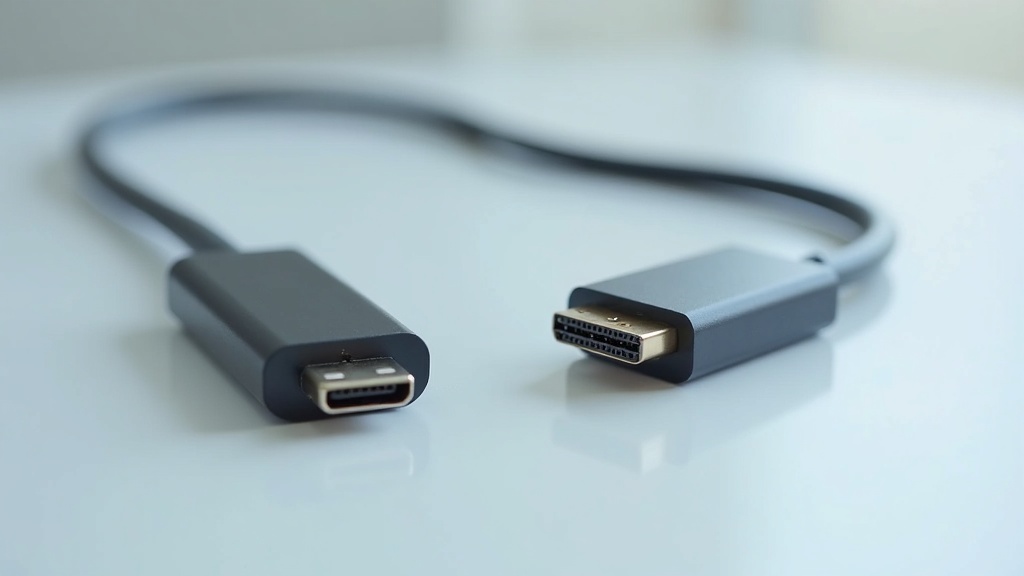
USB C to USB and HDMI Adapter: Complete Guide 2025
Learn everything about a USB C to USB and HDMI adapter, including how it works, what to look for, and how to choose the best one for your laptop or tablet in 2025.
Table of Contents
- Quick Summary
- USB C to USB and HDMI Adapter in Context
- Introduction
- How a USB C to USB and HDMI Adapter Works
- Key Features to Look For
- Top Use Cases for a USB C to USB and HDMI Adapter
- Compatibility and Performance Considerations
- Frequently Asked Questions
- Comparison: USB C to USB and HDMI Adapter vs. Other Solutions
- Practical Tips for Choosing and Using Your Adapter
- Final Thoughts on USB C to USB and HDMI Adapter
- Further Reading
Quick Summary: A USB C to USB and HDMI adapter is a compact device that lets you connect legacy USB-A peripherals and an HDMI display to a modern laptop or tablet through a single USB-C port. It relies on USB-C alternate modes and Power Delivery to deliver data, video, and charging through one cable.
USB C to USB and HDMI Adapter in Context
- As of early 2024, over 2,500 USB-C device and cable products had been USB-IF certified, indicating the size of the ecosystem relying on standards-compliant adapters (USB Implementers Forum, 2024)[1].
- Many mainstream USB-C to HDMI adapters support video output up to 4K at 60 Hz (Video Electronics Standards Association, 2024)[2].
- In 2024, 92 percent of laptops shipped worldwide included at least one USB-C port, highlighting demand for USB-C to HDMI and USB-A adapters (IDC, 2024)[3].
Introduction
The USB C to USB and HDMI adapter has become an essential accessory for anyone using a modern laptop, tablet, or smartphone. As manufacturers slim down devices, they often replace full-sized USB-A ports and dedicated HDMI outputs with a single USB-C port. This shift creates a problem: how do you connect your existing mouse, keyboard, flash drive, and external monitor? The answer lies in a compact adapter that combines legacy USB-A connectivity with HDMI video output. This article explains how these adapters work, what specifications matter, and how to choose the right one for your needs. If your workplace is transitioning to USB-C-only devices, understanding workplace AI adoption helps contextualize the hardware changes driving adapter demand.
How a USB C to USB and HDMI Adapter Works
A USB C to USB and HDMI adapter functions by leveraging the USB-C connector’s ability to carry multiple protocols simultaneously. The USB-C port on your device supports data transfer, power delivery, and video signals through what are called alternate modes. When you plug in the adapter, it negotiates with the host device to determine which protocols to activate.
Alternate Modes Explained
USB-C alternate modes allow the connector to carry non-USB signals like DisplayPort, HDMI, or Thunderbolt. For an adapter that outputs HDMI, the device typically uses DisplayPort Alt Mode over USB-C and then converts that signal to HDMI inside the adapter. The USB Implementers Forum (USB-IF) oversees this standard. As Brad Saunders, Chairman of the USB-IF, stated in 2023, “USB Type‑C and USB Power Delivery together enable a single-cable solution for data, power and video, allowing users to connect to displays like HDMI while still powering their systems”[4].
Power Delivery and Data
Most adapters also support USB Power Delivery (PD) pass-through, meaning you can charge your laptop through the same USB-C port while simultaneously using the HDMI output and USB-A ports. This is a critical feature for mobile workers who need to keep their devices powered during presentations or extended work sessions. The adapter acts as a hub, splitting the single USB-C port into multiple functional connections.
Key Features to Look For
When selecting a USB C to USB and HDMI adapter, several specifications determine its performance and suitability for your workflow. Not all adapters are created equal, and understanding these features helps avoid common pitfalls like flickering displays or slow data transfers.
Video Resolution and Refresh Rate
The maximum supported video resolution is a primary differentiator. Many basic adapters compliant with HDMI 1.4 support up to 4K at 30 Hz, which is adequate for presentations but may feel sluggish for desktop work[5]. Higher-quality adapters support 4K at 60 Hz, providing smoother motion and better clarity for detailed tasks like video editing or design work[2]. Some premium models even support 8K output, though these are less common and require a host device capable of driving that resolution.
USB-A Port Specifications
The USB-A ports on the adapter vary in speed. Look for USB 3.0 (5 Gbps) or USB 3.1 Gen 2 (10 Gbps) ports for fast file transfers. Older adapters may only offer USB 2.0 (480 Mbps), which is fine for keyboards and mice but painfully slow for external drives. Also, consider the number of USB-A ports – two or three is typical for multiport adapters.
Build Quality and Certification
USB-IF certification ensures that the adapter meets industry standards for safety and performance. As of early 2024, over 2,500 USB-C products had been certified[1]. Certified adapters are less likely to cause charging issues, data corruption, or display problems. Jeff Ravencraft, President and COO of the USB-IF, noted in 2022 that “the USB Type‑C connector is designed to be a universal solution, supporting multiple protocols such as DisplayPort and HDMI through alternate modes so manufacturers can deliver single-port docking and adapter products”[6].
Top Use Cases for a USB C to USB and HDMI Adapter
The versatility of a USB C to USB and HDMI adapter makes it valuable across many scenarios. Understanding these use cases helps you determine which features matter most for your specific situation.
Mobile Workstations and Hot Desking
For employees who move between desks or work from home and the office, a compact adapter is a lifesaver. You can plug your laptop into a single adapter that connects to a monitor, keyboard, mouse, and Ethernet (if the adapter includes that port). This eliminates the need to unplug multiple cables each time you move. The VESA Technical Committee highlighted in 2022 that “DisplayPort Alt Mode over USB‑C allows a single USB‑C port to drive HDMI, VGA, and DisplayPort displays through passive and active adapters, enabling thin devices to support legacy video connections”[7].
Presentations and Meetings
When giving a presentation, you often need to connect to a projector or large monitor while also having a USB drive handy. A USB-C to HDMI and USB adapter lets you share your screen and access files simultaneously. If the projector only has HDMI, this adapter is the perfect bridge.
Home Entertainment
Some users connect their laptop to a TV for streaming movies or playing games. A USB C to USB and HDMI adapter can output video to the TV while also connecting a game controller or external storage via USB-A. This turns your laptop into a versatile media center.
Compatibility and Performance Considerations
Not every USB C to USB and HDMI adapter works flawlessly with every device. Compatibility depends on the host device’s USB-C implementation, the adapter’s chipset, and the connected peripherals.
Host Device Requirements
Your laptop or tablet must support USB-C with DisplayPort Alt Mode or Thunderbolt 3/4 to output video over USB-C. Some devices, particularly budget laptops, may have USB-C ports that only support data and charging, not video. Check your device’s specifications before purchasing an adapter. The StarTech.com Product Management Team noted in 2024 that “USB‑C multiport adapters that combine HDMI and traditional USB‑A ports have become a primary way for mobile workers to connect legacy peripherals and external monitors using the single USB‑C port on modern laptops”[8].
Power Delivery Negotiation
If your adapter supports power pass-through, ensure it can deliver enough wattage to charge your laptop under load. A 60W adapter is generally sufficient for ultrabooks, while larger laptops may need 100W. Poor power negotiation can lead to slow charging or battery drain during use.
Driver and Software Support
Most adapters are plug-and-play on Windows, macOS, and Chrome OS. However, some advanced features like Ethernet or additional display outputs may require driver installation. Always check the manufacturer’s support page for the latest drivers. If your organization is overcoming AI adoption barriers in the workplace, ensuring compatible hardware like adapters is part of the broader IT strategy.
Important Questions About USB C to USB and HDMI Adapter
Can I use a USB C to USB and HDMI adapter with my smartphone?
Yes, many modern smartphones with USB-C ports support video output via DisplayPort Alt Mode, including recent models from Samsung, Huawei, and some from Google and OnePlus. When you connect a USB-C to HDMI adapter, the phone can mirror or extend its display to a monitor or TV. However, not all phones support this feature – iPhones with USB-C (iPhone 15 series) do support video output, but some mid-range Android phones may limit the USB-C port to charging and data only. Always check your phone’s specifications before assuming compatibility.
Will a USB C to USB and HDMI adapter work with a MacBook or iPad?
Absolutely. Apple’s MacBook lineup (since 2015) and iPad Pro models (since 2018) use USB-C ports that fully support DisplayPort Alt Mode and USB Power Delivery. These devices work seamlessly with most USB-C to HDMI and USB-A adapters. However, note that some adapters may not support the full resolution or refresh rate of Apple’s high-end displays. For example, driving a 5K or 6K display may require a Thunderbolt adapter rather than a standard USB-C adapter. For most external monitors up to 4K at 60 Hz, a standard adapter works perfectly.
Why does my display flicker or not work with the adapter?
Display flickering or no signal can result from several issues. First, check that your host device supports video output over USB-C – not all USB-C ports do. Second, ensure the adapter is properly seated and the HDMI cable is secure. Third, try a different HDMI cable, as some cables are not rated for 4K at 60 Hz. Fourth, update your graphics drivers and the adapter’s firmware if available. The Anker Product Engineering Team noted in 2025 that a “well‑designed USB‑C to HDMI and USB adapter must correctly implement USB‑C power delivery negotiation and video alternate modes to avoid issues like flickering displays, unstable connections, or limited resolutions”[9]. If problems persist, the adapter may be defective or incompatible.
Can I charge my laptop while using the adapter?
Yes, if the adapter includes a USB-C Power Delivery (PD) pass-through port. This port allows you to connect your laptop’s charger to the adapter, which then delivers power to the laptop through the same USB-C cable. This is a critical feature for mobile workers who need to keep their devices charged during extended use. However, check the adapter’s power rating – some adapters support up to 100W, while cheaper models may only handle 60W. If your laptop requires more power than the adapter can pass through, your battery may still drain slowly during heavy use.
Comparison: USB C to USB and HDMI Adapter vs. Other Solutions
When you need to connect legacy devices and an external monitor to a USB-C laptop, you have several options. The table below compares a compact USB-C to HDMI and USB-A adapter with a full docking station and a direct USB-C to HDMI cable, helping you decide which solution fits your needs.
| Feature | USB C to USB and HDMI Adapter | USB-C Docking Station | Direct USB-C to HDMI Cable |
|---|---|---|---|
| Portability | Very high (pocket-sized) | Low (bulky, requires power) | High (cable only) |
| Number of USB-A ports | 2–3 | 4–6 | 0 |
| Video output | 1 HDMI (up to 4K 60Hz) | 2–3 displays (HDMI/DP) | 1 HDMI (up to 4K 60Hz) |
| Power delivery pass-through | Yes (60–100W) | Yes (60–100W) | No |
| Cost | $15–$40 | $100–$300 | $10–$25 |
| Best for | Mobile workers, travelers | Fixed desktop setups | Simple monitor connection |
For most users, a USB C to USB and HDMI adapter offers the best balance of portability, functionality, and cost. It is the ideal companion for modern laptops that have eliminated legacy ports.
Practical Tips for Choosing and Using Your Adapter
Selecting the right USB C to USB and HDMI adapter can save you frustration and money. Follow these actionable tips to ensure you get a device that meets your needs.
1. Verify Your Device’s USB-C Capabilities
Before buying, check your laptop or tablet’s specifications to confirm its USB-C port supports DisplayPort Alt Mode or Thunderbolt. Look for a DisplayPort or Thunderbolt logo next to the port. If your device’s USB-C only supports data and charging, the adapter’s HDMI output will not work.
2. Prioritize USB-IF Certification
Look for adapters that are USB-IF certified. This certification ensures the device meets industry standards for safety, performance, and interoperability. Avoid cheap, uncertified adapters that may cause charging issues, data loss, or even damage your device.
3. Match the Adapter to Your Monitor’s Resolution
If you have a 4K monitor that supports 60 Hz, do not buy an adapter limited to 4K at 30 Hz. The difference in smoothness and clarity is significant. For most users, an adapter supporting 4K at 60 Hz is the sweet spot for value and performance.
4. Consider Future-Proofing
If you plan to upgrade your monitor or laptop in the next year or two, consider an adapter that supports higher resolutions (like 8K) or faster USB data speeds. While slightly more expensive, future-proofing saves you from buying another adapter later.
5. Test the Adapter Immediately
When you receive your adapter, test it with all your peripherals and monitors within the return window. Check for flickering, signal dropouts, and charging performance. This quick test ensures you can return a defective unit without hassle.
For more about D c in washington dc, see find d c in washington dc resources.
Final Thoughts on USB C to USB and HDMI Adapter
A USB C to USB and HDMI adapter is a small but powerful tool that bridges the gap between modern USB-C devices and legacy peripherals. With over 92 percent of new laptops shipping with USB-C ports, the demand for reliable adapters will only grow. By understanding alternate modes, power delivery, and key specifications like resolution support, you can choose an adapter that works seamlessly for years. Whether you are a mobile professional, a student, or a home user, investing in a quality adapter simplifies your setup and keeps you productive. For more insights on optimizing your tech stack, explore our resources on workplace AI adoption and overcoming AI adoption barriers in the workplace.
Further Reading
- USB-IF Certified USB Product List. USB Implementers Forum.
https://www.usb.org/sites/default/files/USB-IF%20Certified%20USB%20Product%20List.pdf - DisplayPort Alt Mode USB-C 4K 60Hz Guidelines. Video Electronics Standards Association (VESA).
https://vesa.org/featured-articles/displayport-alt-mode-usb-c-4k-60hz-guidelines - IDC Worldwide Quarterly Personal Computing Device Tracker – Summary. IDC.
https://www.idc.com/getdoc.jsp?containerId=prUS52033424 - USB-IF Announces USB4 Specification Update. USB Implementers Forum.
https://www.usb.org/sites/default/files/2023-01/USB4%20Update%20Press%20Release.pdf - HDMI 1.4 Specification Overview. HDMI Licensing Administrator.
https://hdmi.org/spec/hdmi1_4 - USB Type‑C Cable and Connector Specification Revision 2.2 – Overview. USB Implementers Forum.
https://www.usb.org/sites/default/files/USB%20Type-C%20Spec%20Overview%20Sept%202022.pdf - DisplayPort Alt Mode for USB Type‑C Standard – Application Notes. VESA.
https://vesa.org/wp-content/uploads/2022/10/DP-Alt-Mode-USB-C-Application-Note.pdf - Choosing the Right USB‑C Multiport Adapter for Your Laptop. StarTech.com.
https://www.startech.com/en-us/solutions/choosing-usb-c-multiport-adapters - Why Quality Matters in USB‑C Hubs and Adapters. Anker.
https://www.anker.com/blogs/charging/usb-c-hubs-and-adapters-quality-guide