
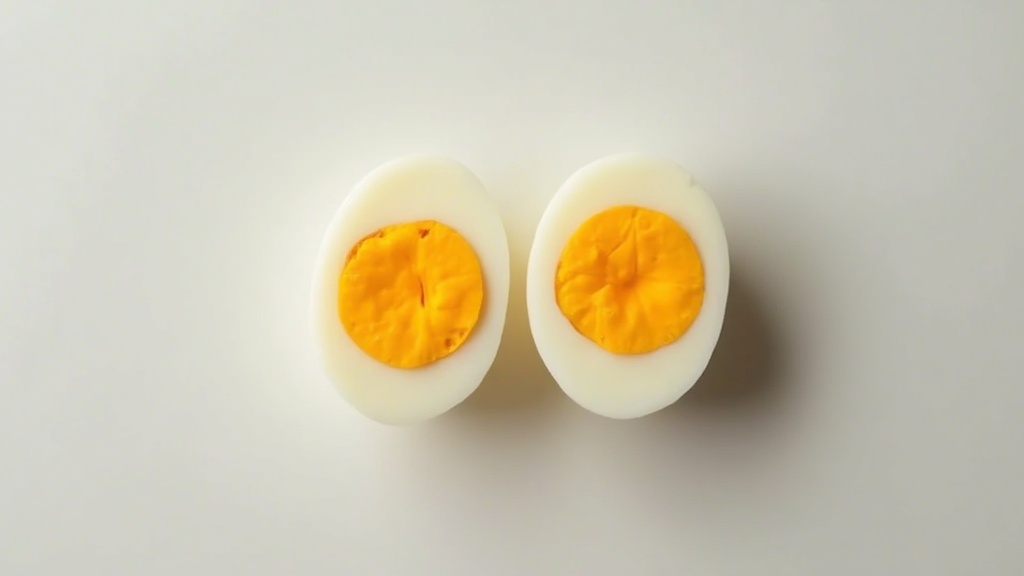
How Long Does an Egg Boil to Be Hard Boiled? The Exact Times
How Long Does an Egg Boil to Be Hard Boiled? The Exact Times
Knowing exactly how long does an egg boil to be hard boiled is a common kitchen question. Getting the timing right separates a perfect, creamy yolk from a chalky, overcooked one. This guide provides the precise minutes and methods you need for flawless hard-boiled eggs every time.
Table of Contents
- The Science of Boiling Eggs
- Exact Timing for Perfect Hard-Boiled Eggs
- Popular Methods Compared
- Peeling and Storage Tips
- Frequently Asked Questions
- Comparison Table
- Practical Tips
- Final Thoughts on How Long an Egg Boils to Be Hard Boiled
- Further Reading
Article Snapshot: how long does an egg boil to be hard boiled depends on your method. The standard answer is 10 to 12 minutes of active boiling for large eggs. This article breaks down the exact timings from top chefs and food scientists, compares popular techniques, and provides actionable tips for perfect results.
Quick Stats: Hard-Boiled Egg Timing
- 12 minutes of active boiling is the recommended time for fully set yolks without overcooking (Healthline, 2024)[1]
- The American Egg Board suggests letting large eggs stand in hot water for about 12 minutes after reaching a boil[3]
- Boiling for 15 minutes or more results in rubbery whites and powdery yolks (RecipeTin Eats, 2025)[4]
The question of how long does an egg boil to be hard boiled is deceptively simple. The answer, however, varies based on egg size, starting temperature, altitude, and personal preference. This article provides a definitive guide to achieving the perfect hard-boiled egg, drawing on expert advice from professional chefs and food scientists.
We will explore the science behind egg cooking, break down exact timings from leading sources, compare popular methods like the 6+6 technique and the classic boil-and-stand approach, and offer practical advice for peeling and storage. By the end, you will have a clear, reliable method for making hard-boiled eggs that are easy to peel and have a perfectly cooked yolk.
The Science of Boiling Eggs
Understanding what happens inside an egg as it heats up is the first step to mastering the perfect hard-boiled egg. The white and yolk are made of proteins that coagulate, or solidify, at different temperatures. The egg white sets at around 180°F (82°C), while the yolk sets at a slightly lower temperature, around 158°F (70°C). The key is to apply enough heat to fully set the yolk without overcooking the white.
Overcooking causes the proteins to tighten excessively, squeezing out water and creating a rubbery texture in the white and a dry, chalky, or green-tinged yolk. The green ring that sometimes forms around the yolk is a harmless reaction between iron in the yolk and sulfur in the white, which occurs when eggs are cooked at too high a temperature or for too long. This is why many experts, including registered dietitian Kelli McGrane, recommend a precise window of 12 to 13 minutes of boiling for classic hard-boiled eggs[1].
For those who want to understand the underlying process, the coagulation of egg proteins is a well-documented scientific phenomenon. You can find a detailed explanation of this process in Serious Eats’ comprehensive guide to egg science. The starting temperature of the eggs also plays a role. Fridge-cold eggs will require slightly longer cooking time than eggs at room temperature to reach the same level of doneness.
Exact Timing for Perfect Hard-Boiled Eggs
When it comes to the specific question of how long does an egg boil to be hard boiled, the consensus among experts points to a range of 10 to 13 minutes of active boiling for large eggs. The exact time depends on the specific method and the desired texture of the yolk. For a classic hard-boiled egg with a fully set, but not chalky, yolk, 12 minutes is a reliable target.
Here is a breakdown of timings from trusted sources:
- 12 Minutes of Boiling: Healthline recommends 12 minutes for a fully set yolk that is not overcooked[1]. This is a solid, middle-of-the-road time.
- 10 Minutes of Boiling: Nagi Maehashi from RecipeTin Eats suggests 10 minutes of boiling for fridge-cold eggs placed into already boiling water, noting that longer times lead to rubbery whites and dry yolks[4].
- 12 to 15 Minutes of Simmering: Smitten Kitchen provides a broader range of 12 to 15 minutes for a low boil or simmer, allowing for personal preference[5].
It is crucial to note that these timings are for large eggs. Medium or extra-large eggs will require slight adjustments, typically adding or subtracting 30 to 60 seconds. Altitude also affects boiling time, as water boils at a lower temperature at higher elevations, requiring a longer cooking time to achieve the same level of doneness.
Popular Methods Compared
There are several tried-and-true methods for achieving perfect hard-boiled eggs, each with its own set of timings and techniques. The most common are the continuous-boil method and the boil-and-stand method. A third, popular variation is the 6+6 method, which aims for a gentler cooking process.
The Continuous-Boil Method
This is the most straightforward approach. Place eggs in a saucepan, cover with cold water by an inch, bring to a rolling boil, then reduce to a gentle boil or simmer. Start timing from the moment the water reaches a full boil. For hard-boiled eggs, cook for 10 to 12 minutes.
The Boil-and-Stand Method
This method, recommended by both the American Egg Board and Heidi Swanson of 101 Cookbooks, is gentler and less likely to result in overcooked eggs. Bring water to a boil, carefully lower the eggs into the water, and boil for 1 minute. Then, remove the pan from the heat, cover it, and let the eggs stand in the hot water for 10 to 12 minutes[3][6]. This method uses residual heat to finish cooking, resulting in a tender white and a creamy yolk.
The 6+6 Method
Chef Billy Parisi’s “6+6 method” is another variation on the boil-and-stand technique. He recommends boiling the eggs for exactly 6 minutes, then turning off the heat and letting them sit in the hot water for another 6 minutes[2]. This method is specifically designed to produce a perfectly set yolk with no green ring. As Chef Parisi explains, “My foolproof method for hard-boiled eggs is what I call the 6+6 method: boil the eggs for 6 minutes, then let them sit off the heat in the hot water for another 6 minutes for a perfectly set yolk with no green ring”[2].
Peeling and Storage Tips
Getting the timing right is only half the battle. A perfectly cooked hard-boiled egg is of little use if it is impossible to peel without destroying the white. The key to easy peeling is shocking the eggs in an ice bath immediately after cooking. This stops the cooking process and causes the egg to contract slightly, pulling the membrane away from the shell.
Heidi Swanson recommends chilling the eggs in an ice-water bath for 7 to 10 minutes[6]. The American Egg Board suggests a full 15 minutes of cooling[3]. For best results, use older eggs, as their higher pH makes them easier to peel. Once cooled, store hard-boiled eggs in the refrigerator, unpeeled, for up to one week. If you have already peeled them, store them in a bowl of cold water, changing the water daily, for up to five days.
Your Most Common Questions
1. How long does an egg boil to be hard boiled if I start with cold water?
If you start with cold water and bring it to a boil with the eggs in the pot, the total time from placing the pot on the stove will be longer. However, the critical timing begins once the water reaches a full boil. For hard-boiled eggs, you should still time 10 to 12 minutes from the moment the water starts boiling vigorously. The initial heating phase adds roughly 5 to 8 minutes depending on your stove and pot size.
2. How long does an egg boil to be hard boiled at high altitude?
At high altitudes, water boils at a lower temperature, so you will need to increase the cooking time. A general rule is to add about 1 minute of boiling time for every 1,000 feet above sea level. For example, at 5,000 feet, you might need to boil large eggs for 15 to 17 minutes instead of the standard 12. The boil-and-stand method can also be effective at altitude, but you may need to increase the standing time.
3. How long does an egg boil to be hard boiled if I want a slightly soft center?
If you prefer a hard-boiled egg with a yolk that is fully set but still moist and slightly creamy in the very center, aim for the lower end of the timing range. A 10-minute boil using the continuous method or a 10-minute stand time with the boil-and-stand method will yield a yolk that is firm but not dry. This is often considered the sweet spot for a classic, pleasant hard-boiled egg.
4. How long does an egg boil to be hard boiled for deviled eggs?
For deviled eggs, you want the yolk to be fully set and firm enough to mash smooth, but not dry or chalky. A 12-minute boil using the continuous method or a 12-minute stand time with the boil-and-stand method is ideal. This ensures the yolk is completely cooked through, easy to separate from the white, and has a smooth, creamy texture when mixed with mayonnaise and seasonings.
Comparison Table: Hard-Boiled Egg Methods
Choosing the right method depends on your preferred level of control and the texture you want. The table below compares the three most popular approaches for cooking large eggs.
| Method | Active Time | Standing Time | Total Time | Yolk Texture |
|---|---|---|---|---|
| Continuous Boil | 10–12 minutes | 0 minutes | 10–12 minutes | Fully set, can be dry if overdone |
| Boil-and-Stand | 1 minute | 10–12 minutes | 11–13 minutes | Fully set, creamy, less chance of green ring |
| 6+6 Method | 6 minutes | 6 minutes | 12 minutes | Perfectly set, no green ring, tender white |
Practical Tips for Perfect Hard-Boiled Eggs
Mastering the timing is the most important step, but a few additional techniques can elevate your results from good to flawless. Follow these tips for eggs that are easy to peel and have the ideal texture.
- Use a Timer: Do not rely on guesswork. Set a timer the moment the water reaches a full boil. Even a minute of extra time can change the texture of the yolk.
- Ice Bath is Non-Negotiable: Immediately transfer the cooked eggs to a bowl of ice water. This stops the cooking process instantly and is the single most important step for easy peeling.
- Gently Roll to Crack: To peel, gently roll the egg on a countertop to create a web of fine cracks, then start peeling from the wider end where the air pocket is located.
- Label Your Eggs: If you are boiling multiple batches, use a pencil to mark the eggs with the cooking time. This is especially helpful if you are making a mix of soft and hard-boiled eggs.
For more detailed culinary guides and kitchen tips, explore the range of articles available on our cooking resources at aitrainingcom.
Final Thoughts on How Long an Egg Boils to Be Hard Boiled
The answer to how long does an egg boil to be hard boiled is a precise 10 to 12 minutes for large eggs, depending on your chosen method. Whether you prefer the directness of a continuous boil, the gentleness of the boil-and-stand technique, or the specific results of the 6+6 method, the key is consistency and using a timer. By understanding the science and applying the practical tips in this guide, you can achieve perfect hard-boiled eggs every time, with tender whites and creamy, fully set yolks. For more kitchen tips and guides, visit aitrainingcom.
Further Reading
- Hard vs. Soft: How Long Does It Take to Boil an Egg? Healthline.
https://www.healthline.com/nutrition/how-long-to-boil-an-egg - Perfect Hard Boiled Eggs (Foolproof 6+6 Method). BillyParisi.com.
https://www.billyparisi.com/perfect-hard-boiled-eggs-recipe/ - How to Make Hard-Boiled Eggs. American Egg Board.
https://www.incredibleegg.org/recipes/cooking-school/how-to-hard-boil-eggs/ - How to Boil Eggs. RecipeTin Eats.
https://www.recipetineats.com/how-to-boil-eggs/ - How to Hard-Boil an Egg. Smitten Kitchen.
https://smittenkitchen.com/2009/08/how-to-hard-boil-an-egg/ - How To Make Hard Boiled Eggs. 101 Cookbooks.
https://www.101cookbooks.com/how-to-make-hard-boiled-eggs/
For more about How long does an egg boil to be hard boiled, see How Long Does An Egg Boil To Be Hard Boiled.